Peacock Bass
The Unbelievable Power of Peacock Bass
Legendary Fury: Peacock Bass tales are true. They attack topwater lures with unmatched aggression, a spectacle unseen in any other fish. Their ferocity makes it seem like they're out to destroy your lure or fly, mistaking it for prey or a rival.
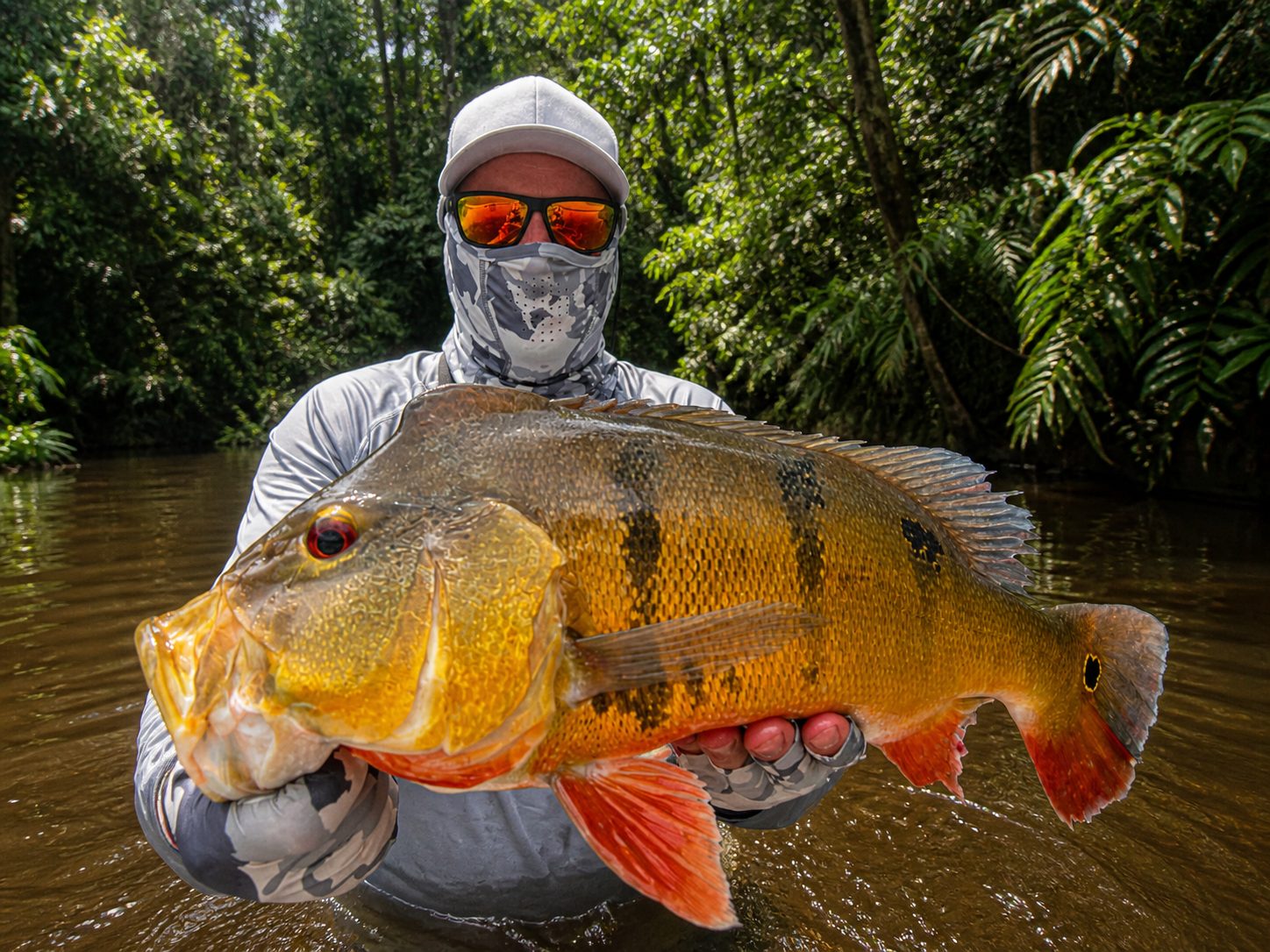
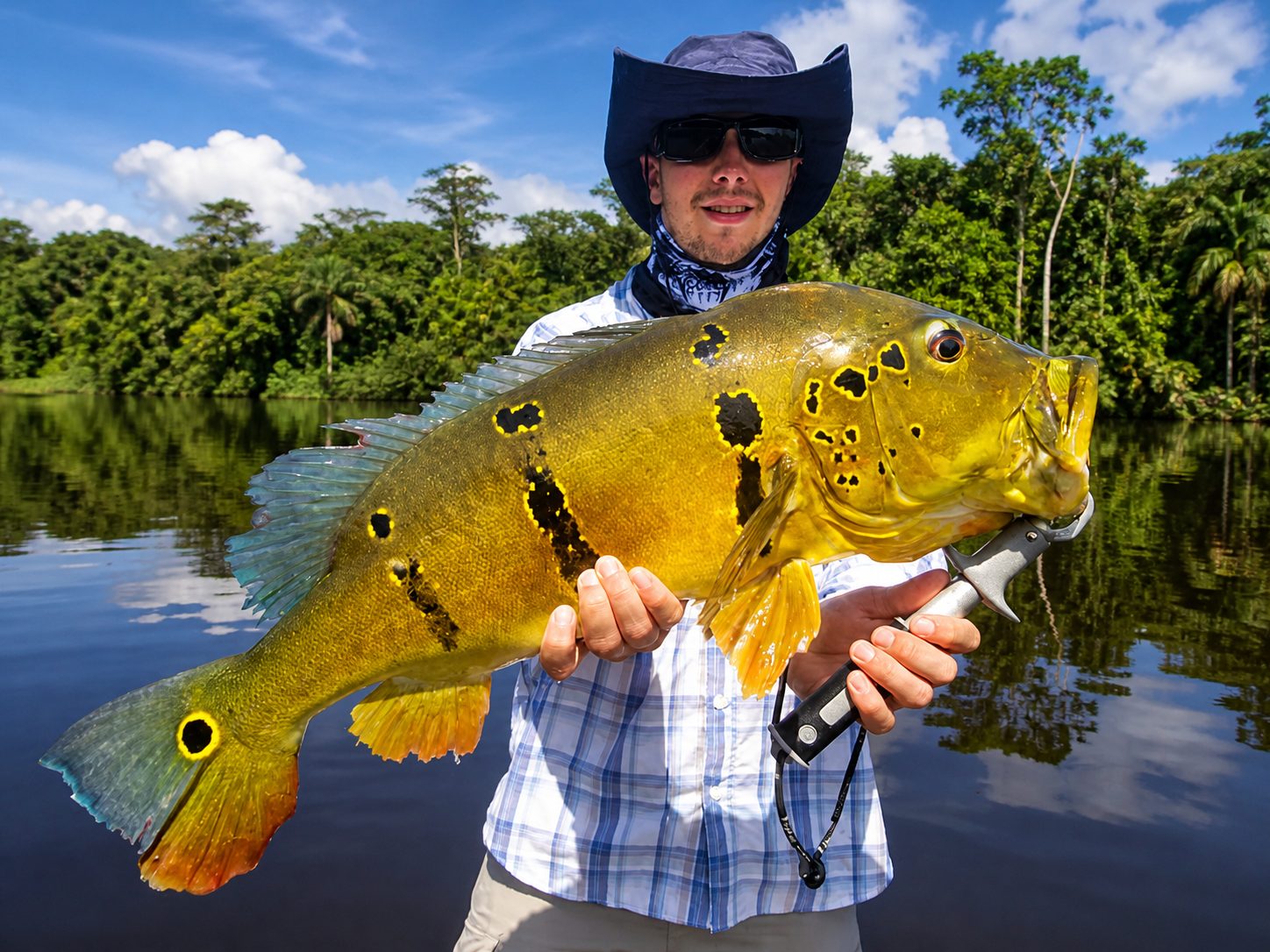
Built for Battle: Imagine a Largemouth Bass on steroids with a jet engine on its back and a multi-colored body, then you have the Peacock Bass! They'll fight with everything they have, leaping, running, and diving towards cover in an instant.
Explosive Strikes: A topwater hit from a peacock is unlike anything else. The sheer violence can snap even 50lb braid like thread. The sound is like a bomb, and the commotion unbelievable. These tenacious fish often chase the lure back to the boat, even slapping it out of the water repeatedly before finally getting hooked. It's an amazing sight to behold!
Subsurface Savagery: Don't underestimate subsurface strikes either. One moment you're retrieving your bait, the next your rod nearly gets ripped from your grasp. Their aggressive power makes them fight like much bigger fish, all the way to the boat.
Beware the Last Stand: Don't be fooled by a tired fish nearing the boat. One look from their fiery red eye can signal another burst of speed, potentially straightening hooks or breaking your line. Peacock bass are fighters to the very end!
Unveiling the Allure of Peacock Bass in Brazil
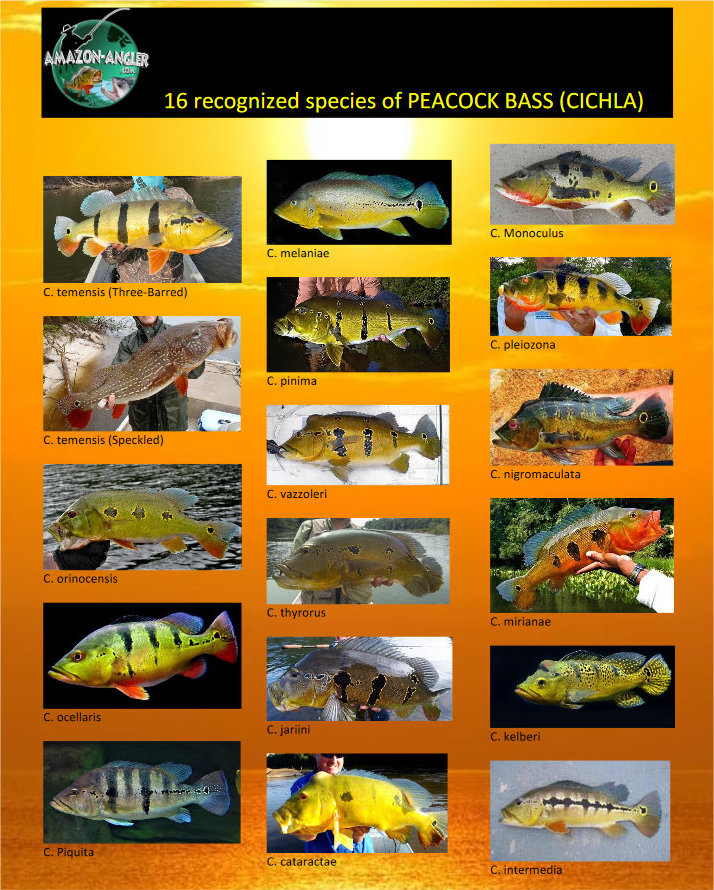
Peacock bass, despite their name, aren't true bass at all. They belong to the Cichla family, and Brazil boasts some of the most stunning varieties.
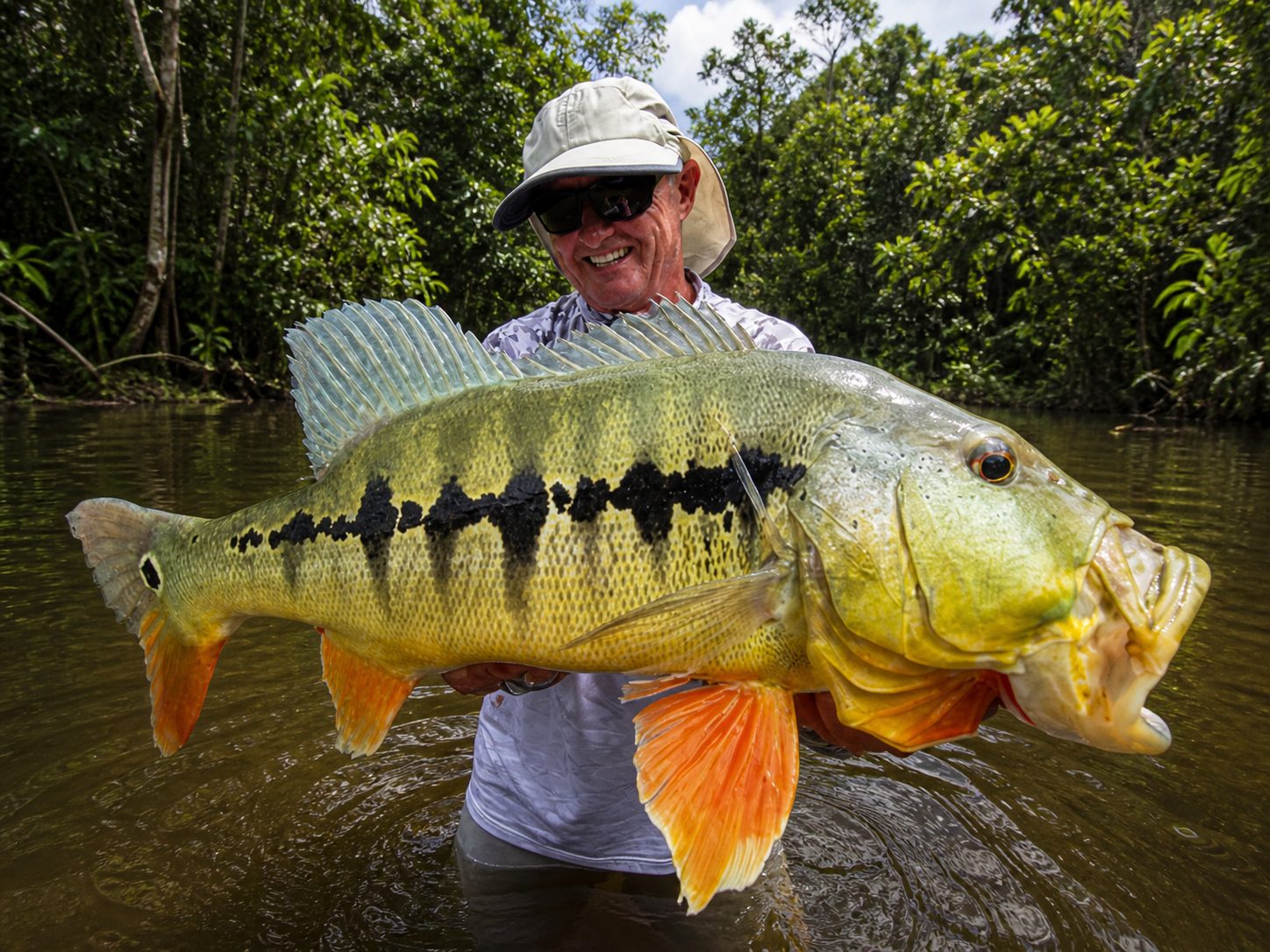
The King of the Jungle: The largest, the Speckled or Giant Three-Barred Peacock Bass (Cichla temensis), reigns supreme. Found naturally in Brazil, Colombia, and Venezuela, these aquatic giants can reach over 30lbs, with the current record held by a 29.4lb beast from Brazil's upper Rio Negro.
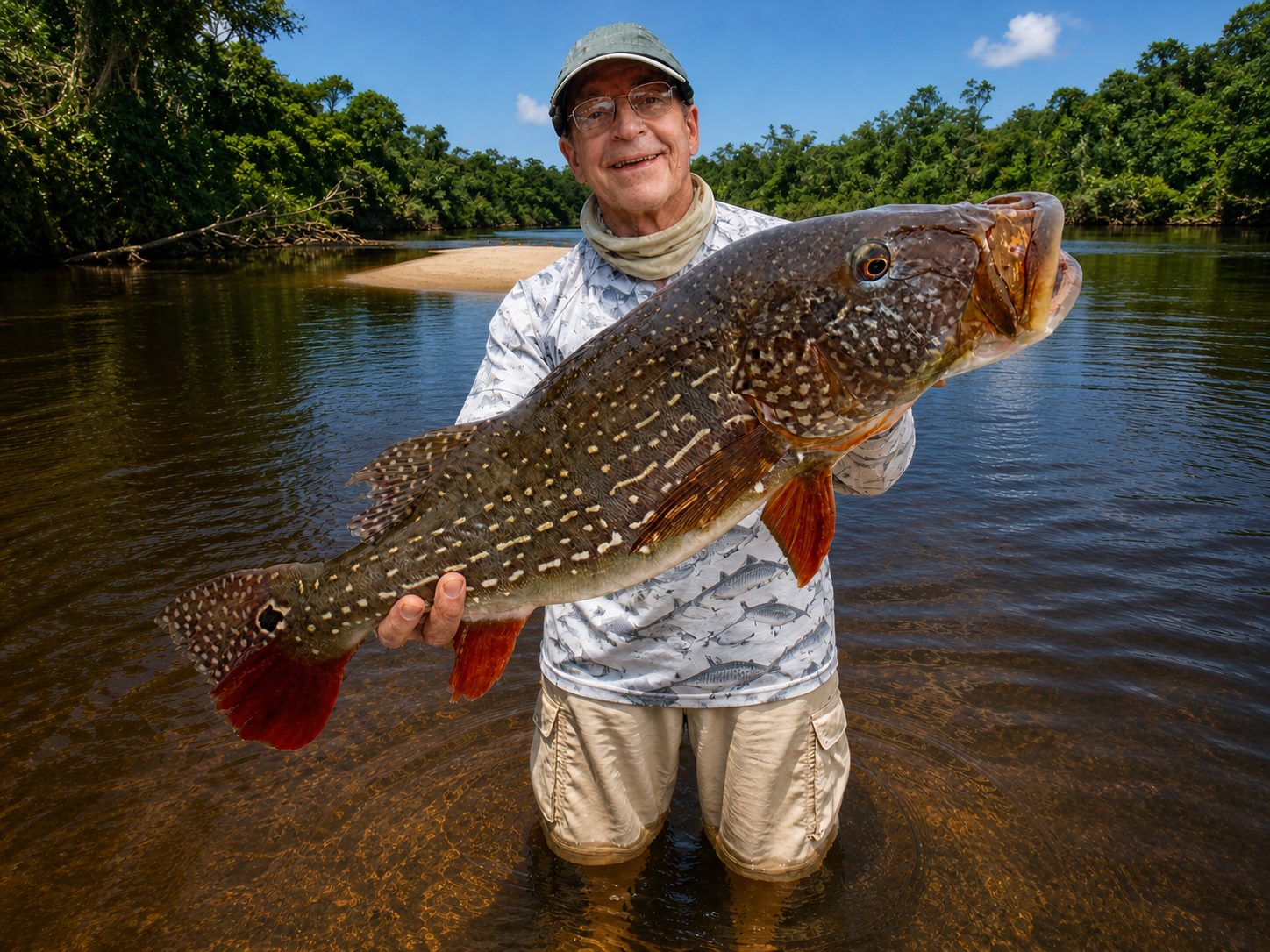
A Fish of Many Names: This master of disguise changes appearance throughout its life. When not spawning, it's known as a Paca, resembling a small Amazon rodent (Cuniculus paca) with a sleek, fast build perfect for hunting. It sports a beautiful coat of white dots and dashes adorning its purple/blue or brown flanks.
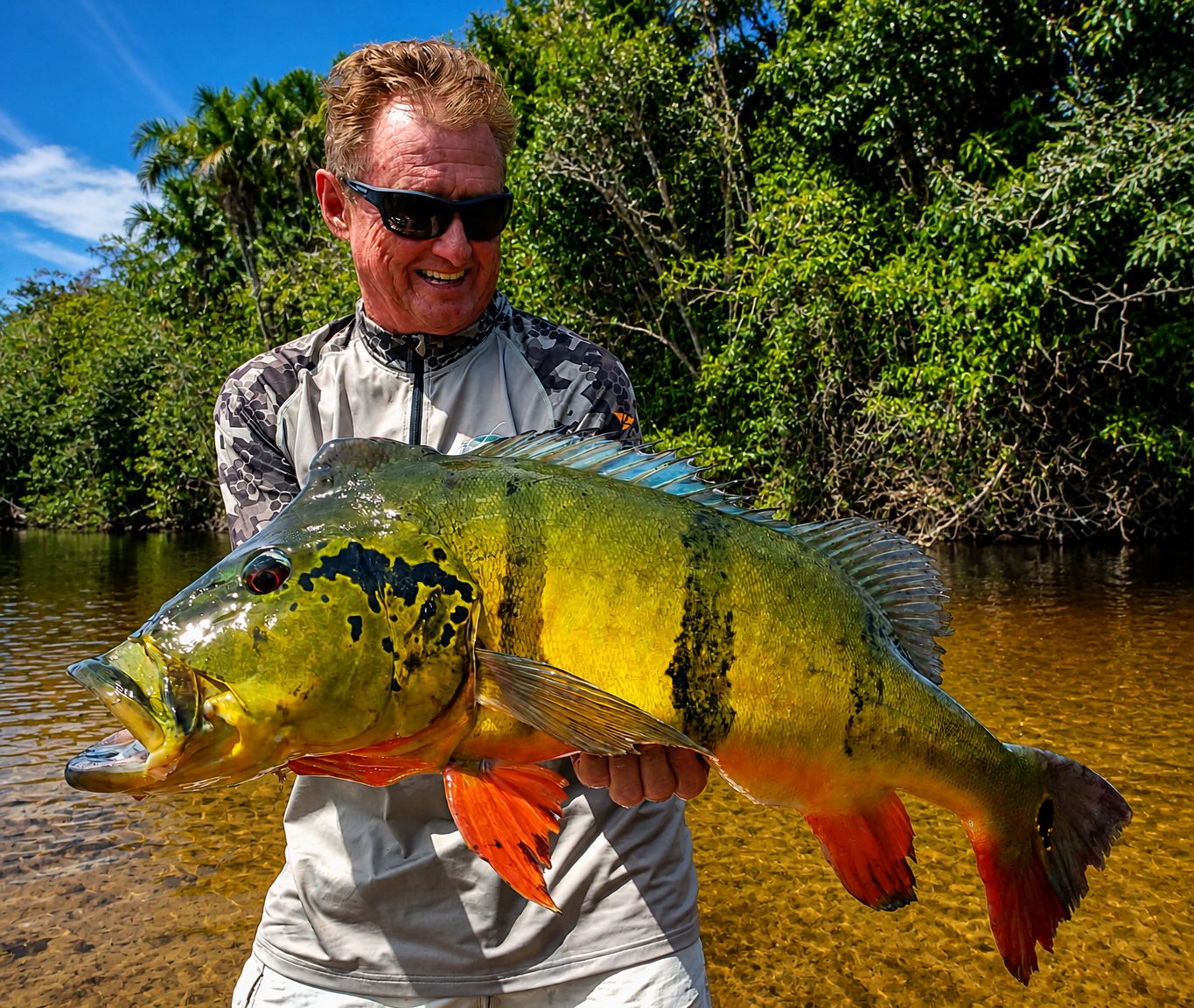
Transformation for Battle: As the Paca grows, it packs on muscle and fat. During this stage, its markings morph, revealing three bold vertical black bars – the Paca-Açu. A full-grown spawning Cichla temensis undergoes a final transformation, shedding its polka-dotted coat for a magnificent display of three black bars on an orange/brown body, earning the title "Açu," meaning "big" in the language of indigenous Brazilians. Witnessing a 20lb+ Açu out of the water is a sight that stays with you forever. Spawning males sport an impressive 'nucal hump' on their heads, believed to be a pheromone dispenser to keep their fry close after hatching.
Habitat and Hunting: The Speckled/Three-Barred Peacock Bass favors slow-moving rivers and eddies, lagoons, and points along the main river. They're ambush predators, lurking near structures and exploding on unsuspecting baitfish. These cunning hunters often betray their presence with loud feeding frenzies, smashing into shoals of baitfish.
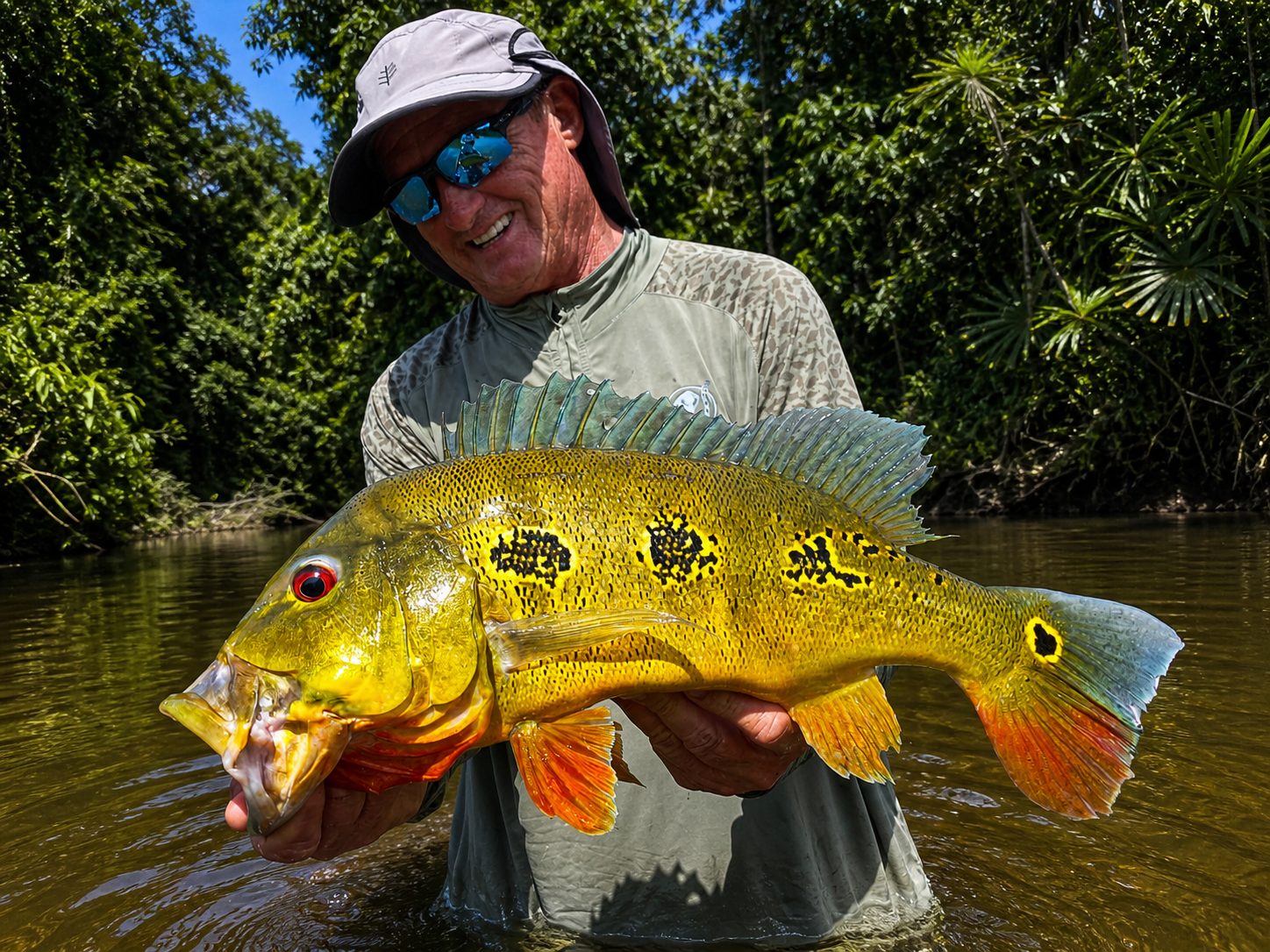
Beyond the Giants: Brazil offers more than just the King. Species like C. pinima, C. vazzoleri, C. thyrorus and C. cataractae inhabit the higher-elevation rivers and streams of the Guyana Shield. Sharing their territory with ferocious predators like the Giant Black Piranha, Payara, and Trairão, these smaller (17-18lb) Peacocks are pound-for-pound some of the hardest fighting fish out there. They thrive in the fast-moving waters around boulders, inlets, and submerged structures.
Life on the Edge: In these piranha-infested highland waters, Peacocks stick close to their rocky havens. Sharing the river with the planet's biggest piranhas (think over 11lbs!), it's no wonder they value their territory.